
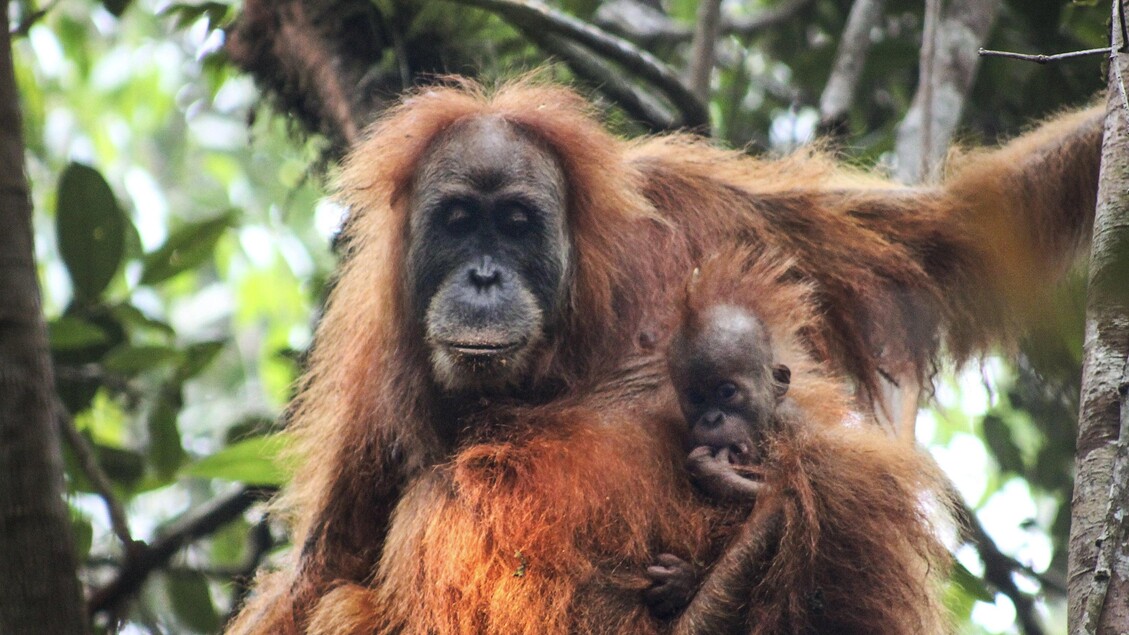
A study reveals this: ‘The Tapanuli species at risk of extinction’
Four days of torrential rain on the Indonesian island of Sumatra have killed at least 58 of the world’s rarest orangutans, the Tapanuli species, pushing them closer to extinction. The BBC reports this, citing a study conducted by the team of Erik Meijaard, managing director of Borneo Futures in Brunei.
Research suggests that the orangutans died due to Cyclone Snyar, an extreme weather event last November and reduced food availability. Wildlife experts and conservationists had previously noted that following the storm, orangutan sightings in Tapanuli had dropped dramatically, fueling speculation that the great apes may have been overwhelmed by floods and landslides.
“The crisis affecting the Tapanuli orangutan illustrates the convergence of climate instability, biodiversity loss and vulnerability, requiring a coordinated response commensurate with the scale of the threat,” the report reads. To protect the remaining orangutans, they add, continued international support will be needed. “Through increased nationwide protection, climate-responsive planning, and global financial and technical assistance, we can still prevent the first modern extinction of a great ape species.”
The frequency and intensity of extreme rainfall in the area is likely to continue into the future, posing a threat to the survival of Tapanuli orangutans and their habitat. Studies indicate that the species, discovered only in 2017, will become extinct if it continues to lose more than 1% of its population each year.
