
The epicenter near Kumamoto, over 300 thousand displaced and several people trapped in the rubble
The earth trembles again in the south-west of Japan, where ten years later nature has manifested itself in all its violence, a reminder that not even the most prepared country in the world against earthquakes can ever truly be said to be safe. The sima had a magnitude of 6.5 according to INGV data, 6.8 according to USGS, 7.1 according to the Japanese Meteorological Agency. The hypocenter of the shock was about 10 km deep.
The first reports of the earthquake that hit the Kumamoto prefecture spoke of at least one dead, over a hundred injured and dozens missing, according to police sources and local media. And they dig through the rubble in search of trapped people.
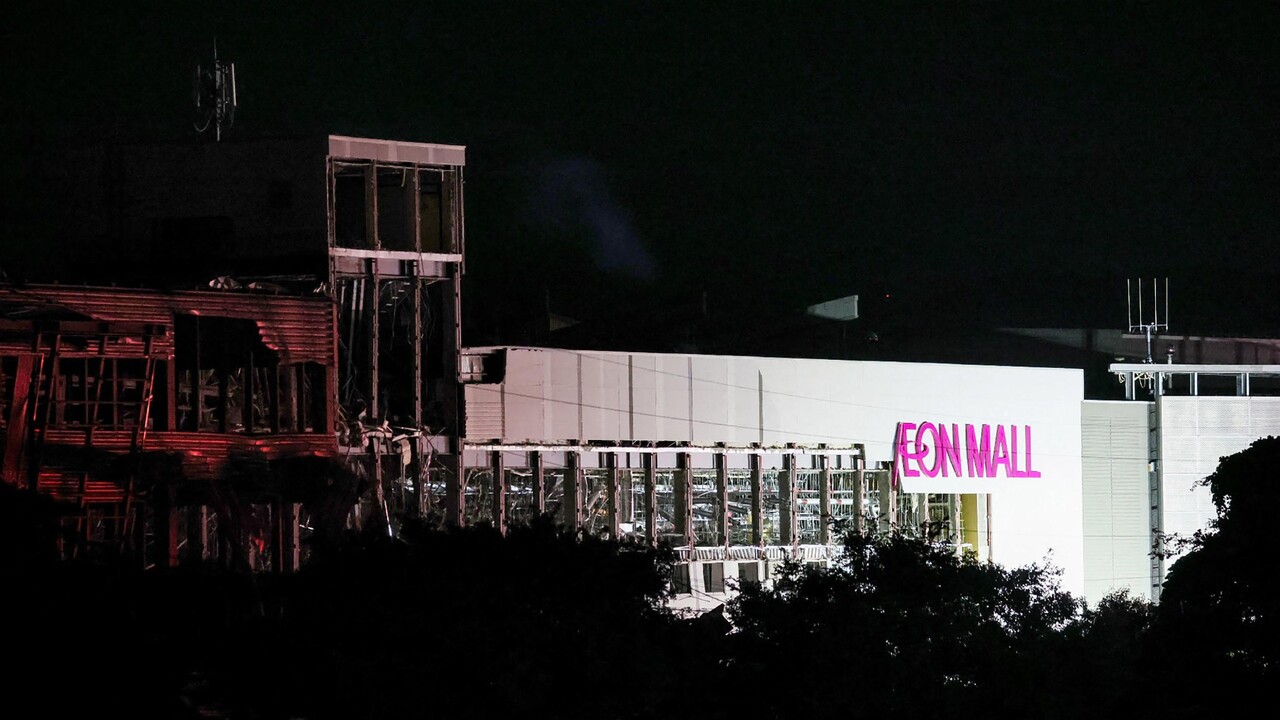
The most serious situation concerns the Aeon Mall shopping center in Kashima, where an explosion occurred after the evacuation of employees and customers, causing the collapse of the second floor. Around 200 people had already left the building, which houses around 160 shops and a cinema, but between 20 and 30 missing people are being searched for in the rubble, according to police sources quoted by the public broadcaster NHK. The Japanese Self-Defense Forces, with around 3,600 soldiers engaged in relief efforts throughout the affected area, are at work in the mall. “I was at the checkout, it wasn’t a tremor like the others. It was a sharp blow, from below, as if something had exploded under our feet”, Kenji Sato, 34, an employee in an electronics store on the second floor, told Japanese media. “The noise was deafening, a dark roar of the earth that drowned out the screams of the customers. Then, suddenly, an even louder roar coming from the opposite wing of the floor: an explosion, perhaps a gas main. At that moment the light went out and we were plunged into pitch darkness, interrupted only by the emergency lights and the sparks from the severed electrical cables”, he added.
Missing people were also reported in a paper factory in Yatsushiro, where the top of a chimney collapsed while a freight train derailed in the area, but no injuries were reported. Several fires, damaged bridges, unsafe homes and the collapse of part of the walls of the historic Kumamoto castle were reported on local TV, while around 45 thousand users remained without electricity. The Kyushu Shinkansen high-speed rail network was entirely suspended, while Kumamoto airport closed for a few hours before reopening in the evening. However, no anomaly was found in the Genkai and Sendai nuclear power plants, according to the operator Kyushu Electric Power, while Prime Minister Sanae Takaichi defined the protection of human lives as a priority, ensuring the government’s maximum commitment in coordination with the local authorities.
The tremor, which occurred at 4.27pm local time at a depth of 16 kilometers along a strike-slip fault, reached a maximum level of 7 on the Japanese seismic scale, the highest recorded since the Noto Peninsula earthquake in 2024.
Numerous aftershocks followed, including one with a magnitude of 6.1, while around 300,000 people were ordered to go to evacuation centers set up by the authorities. A tsunami warning issued immediately after the quake was lifted within hours.
According to experts, the earthquake would be linked to a section of the Hinagu fault that remained inactive in the earthquakes that devastated the same region in April 2016, when two tremors of magnitude 6.5 and 7.3 caused 273 deaths. Over the past decade, minor seismicity along that fault has doubled, according to an analysis by Tohoku University. The Japanese Meteorological Agency (JMA) has invited the population to remain alert over the next two to three days, not ruling out new tremors of intensity up to level 7.
Japan, located along the Pacific “Ring of Fire”, is among the highest seismicity nations in the world, with approximately 18% of global earthquakes recorded on its territory. The country has not yet forgotten the disaster of 2011, when a magnitude 9.0 earthquake generated a tsunami that caused almost 18,500 victims and the Fukushima nuclear disaster.
