
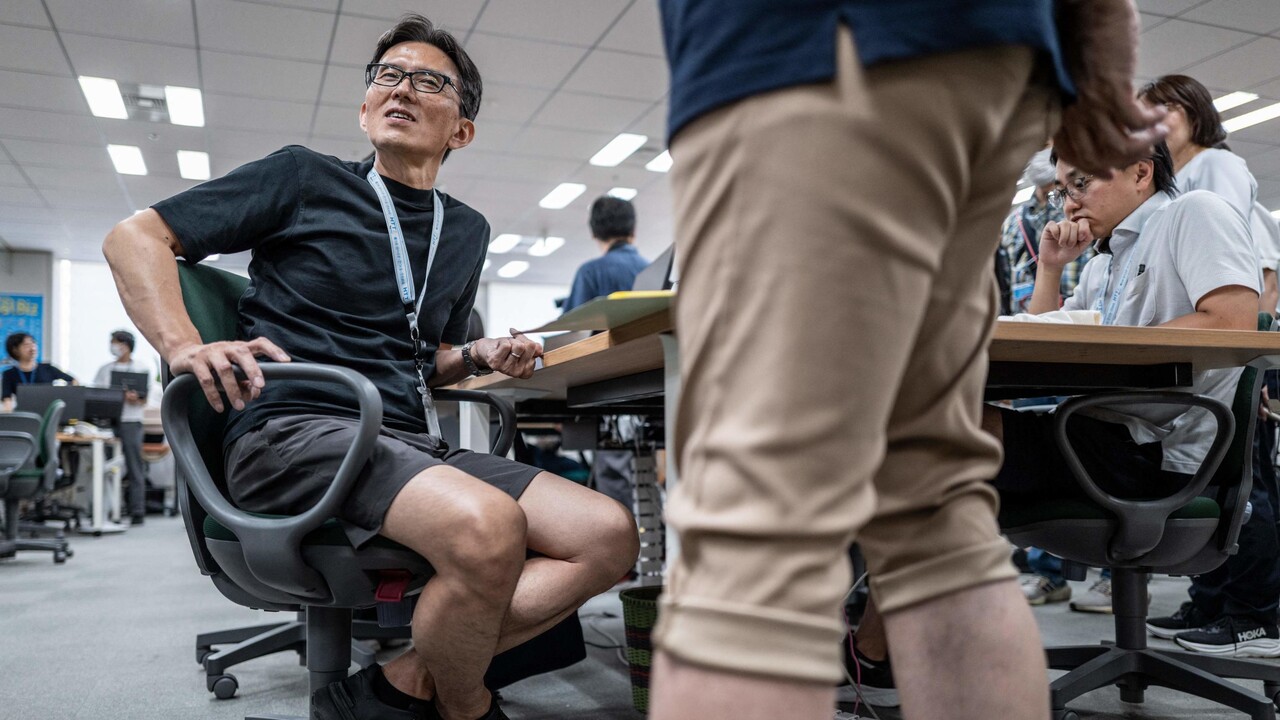
The ‘sune-hara’ case breaks out, colleagues feel harassed by male hair
It took increasingly long and sultry summers to try to undermine the image of the Japanese “salary man”, an icon of a formalism and etiquette that has resisted for decades. But like any self-respecting revolution, even the revolution of shorts in the Tokyo offices collides with a wall of perplexity, controversy and gender issues, transforming a simple item of clothing into a case of national costume.
The initiative is linked to “Cool Biz”, the government campaign launched in 2005 to reduce energy consumption and encourage employees to give up formal dress. For generations, the salaryman’s uniform – jacket, tie, long trousers even above 35 degrees – was less a question of decorum than of belonging: wearing it meant discipline, sacrifice, loyalty to the company. An unwritten code that governed the post-war Japanese economy for decades. The transition to shorts, however, represented a leap of faith for many. The debate focused almost exclusively on liberalization for men, generating an online narrative bordering on fury against fifty-year-olds, to the point of coining the expression “sune-hara” – a contraction of “harassment by leg hair”.
The neologism describes the discomfort, real or perceived, of some employees forced to share elevators and spaces with colleagues in Bermuda shorts and calves in the wind. To complicate the picture, the gender issue. If men can finally lighten up, their colleagues often remain tied to stockings and long skirts, between aesthetic pressures and considerable costs for body care. Atsuko Tamada, professor of French literature at Chubu University, interviewed by the New York Times, puts her finger on the wound: “If men wear sandals and shorts, why shouldn’t they be subject to the same standards of grooming and hair removal?”. A disparity that clashes with the rhetoric of equality, already raised years ago by the former minister and current governor of Tokyo, Yuriko Koike, without however obtaining the same response.
But it’s not just an aesthetic question. As the conservative newspaper Sankei Shimbun points out, Japanese social architecture, founded on hierarchical respect and collective harmony, does not tolerate exceptions. The “average Japanese” is not used to seeing the boss in shorts, and the discomfort is measured in embarrassed looks, jokes and unwritten rules. Male hair removal has become widespread among younger people, while fifty-year-old executives prefer to layer tights to limit exposed skin. Cases of men going to work in shorts are still limited to days without receiving external customers, but some employees report a preparation phase in view of the height of summer. The point, according to metropolitan official Koichi Kurata, should not be the legs themselves, but energy saving and the simplification of internal communication, with positive effects also on human relationships between colleagues. This summer too, the tug of war between light clothing and etiquette is destined to continue.
