
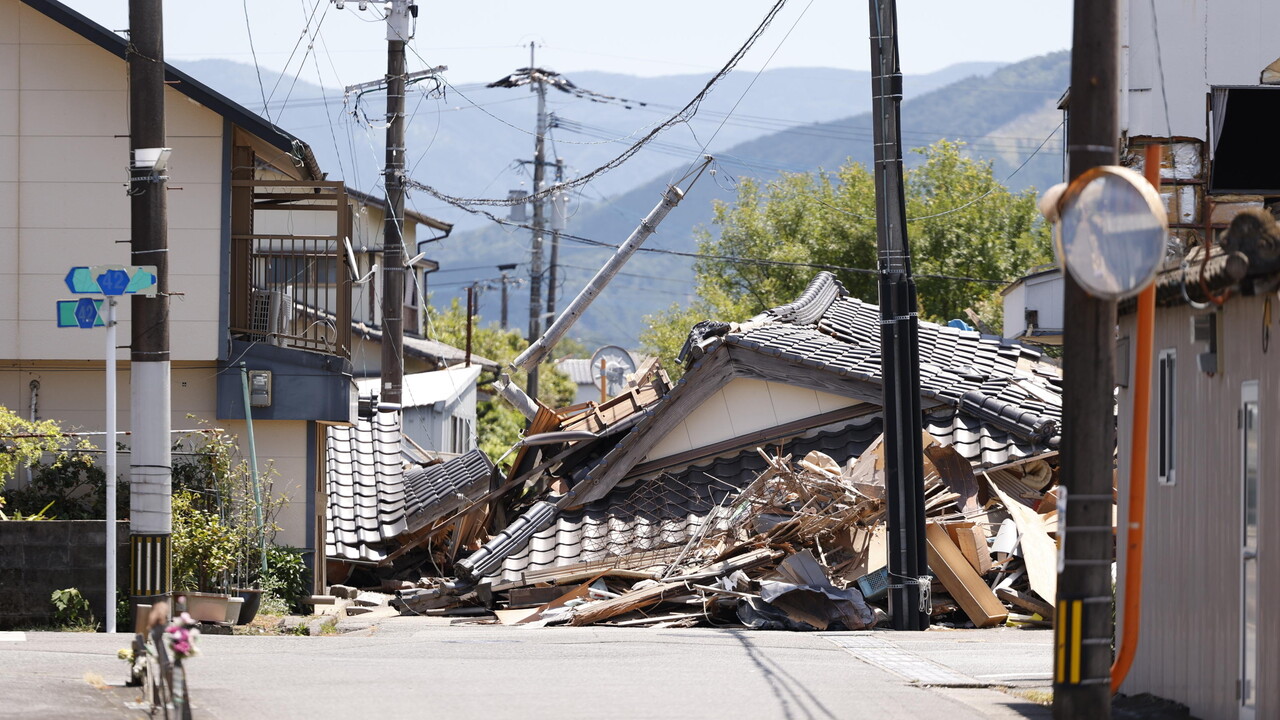
Heat and destroyed houses worsen the emergency in Kumamoto prefecture
Three weeks after the violent earthquake that struck the southwestern prefecture of Kumamoto, Japan, at the end of July, over three thousand people are still living in reception centers or damaged homes. The earthquake, of magnitude 7 – the highest level on the Japanese seismic scale – has so far caused 39 victims, including among these also the deaths believed to be linked to the consequences of the disaster. The material damage was extensive: almost 32,000 homes were affected, of which 1,450 were completely destroyed. 3,053 people are still hosted in the 70 official evacuation centers, says the public broadcaster NHK, with local authorities reporting difficulties in counting those who have found refuge elsewhere, in cars or in unsafe houses; a situation that fuels fears that the lack of assistance could cause further victims. In this regard, the prefectural government has asked municipalities to monitor the conditions of residents in order to guarantee them adequate support. The water situation also remains critical: around 7,380 families in the most affected cities of Uki and Yatsushiro and in the town of Hikawa are still without running water, and the restoration of the service is expected by the end of August. The climate contributes to complicating the rescue operations: temperatures exceed 30 degrees, and the authorities are committed to preventing further deaths linked to the intense heat, which represents an additional risk for the displaced population, in particular the elderly and the most vulnerable.
