
Echoes of condemnation also from Vienna for the use of nuclear weapons
Hiroshima observed a minute’s silence at 8.15 local time (1.15 in Italy) the moment in which, on 6 August 1945, the US bomber Enola Gay dropped the first atomic bomb in history on the city south-west of Japan, causing over 140,000 deaths. A second bomb was used on Nagasaki on August 9, killing at least 74,000 people, mostly civilians, effectively marking the end of the Second World War, with Tokyo’s unconditional surrender.
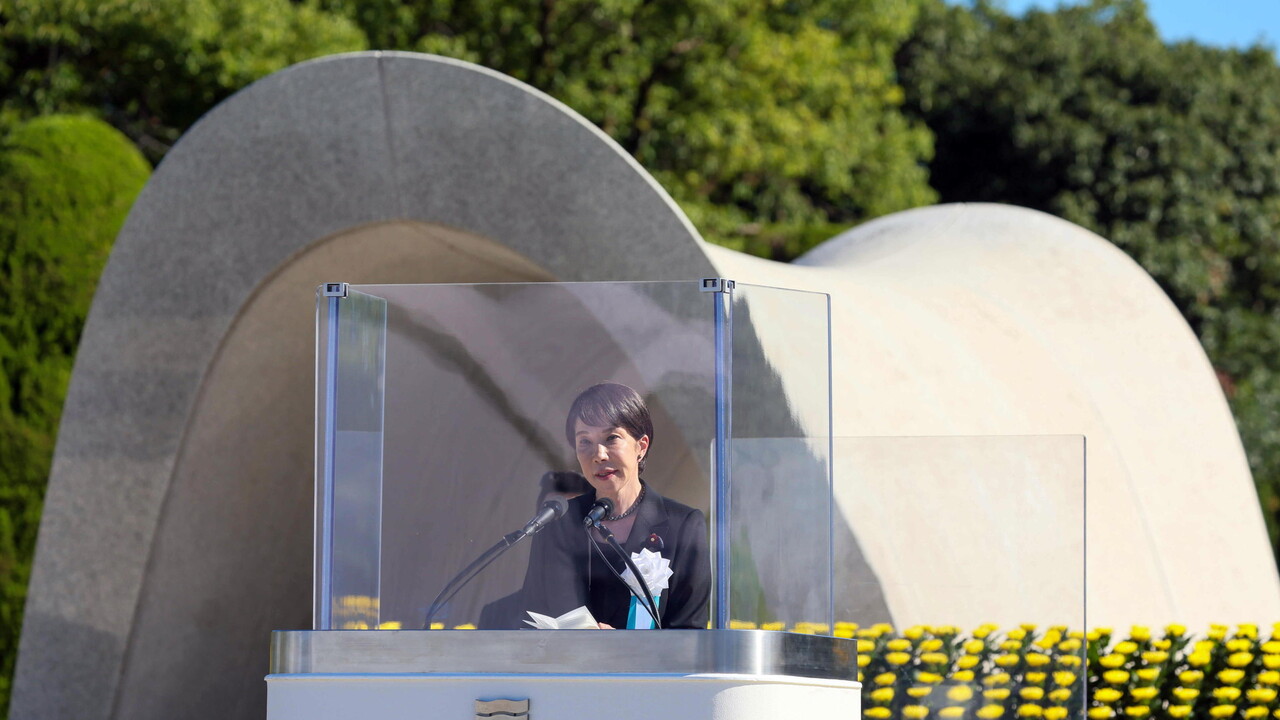
The usual ceremony in the Peace Memorial Park saw the participation of around 50,000 people and record delegations from 121 countries and the European Union, for the 81st anniversary of the attack. In his speech, Mayor Kazumi Matsui read the Declaration of Peace, calling on world leaders to abolish nuclear weapons: “Civil society calls for their immediate elimination. How much longer do you intend to disappoint us?” The mayor also recalled that any use of nuclear weapons today would cause catastrophic damage to humanity, and placed the updated list of victims in the park’s cenotaph, which now numbers 353,639 names, including 4,393 confirmed deaths in the last year. The Japanese Prime Minister, Sanae Takaichi, in her first participation since taking office, reiterated her adherence to Japan’s three non-nuclear principles, without however explicitly committing to maintaining them in the future.
The warning comes after the failure, in May, of the Review Conference of the Nuclear Non-Proliferation Treaty, for the third time without a shared document, against the backdrop of tensions in Ukraine and the Middle East, caused by the attack by the United States and Israel on Iran. From Vienna, in the meantime, Austrian political leaders have relaunched the appeal for disarmament. Spö leader Andreas Babler called for “responsibility for peace” in the face of new rearmaments.
Austria, which in 2022 hosted the first meeting of the states parties to the Treaty on the Prohibition of Nuclear Weapons in Vienna, recalls that the agreement, in force since 2021, is signed by 100 countries and ratified by 75.
With the average age of the ‘hibakusha’ – the survivors of the atomic horror – over 86 years and around 91,000 still alive, the urgency of passing on their testimony to the new generations is growing.
