
After the tycoon’s trouble, ‘US policy on arms sales is unchanged’
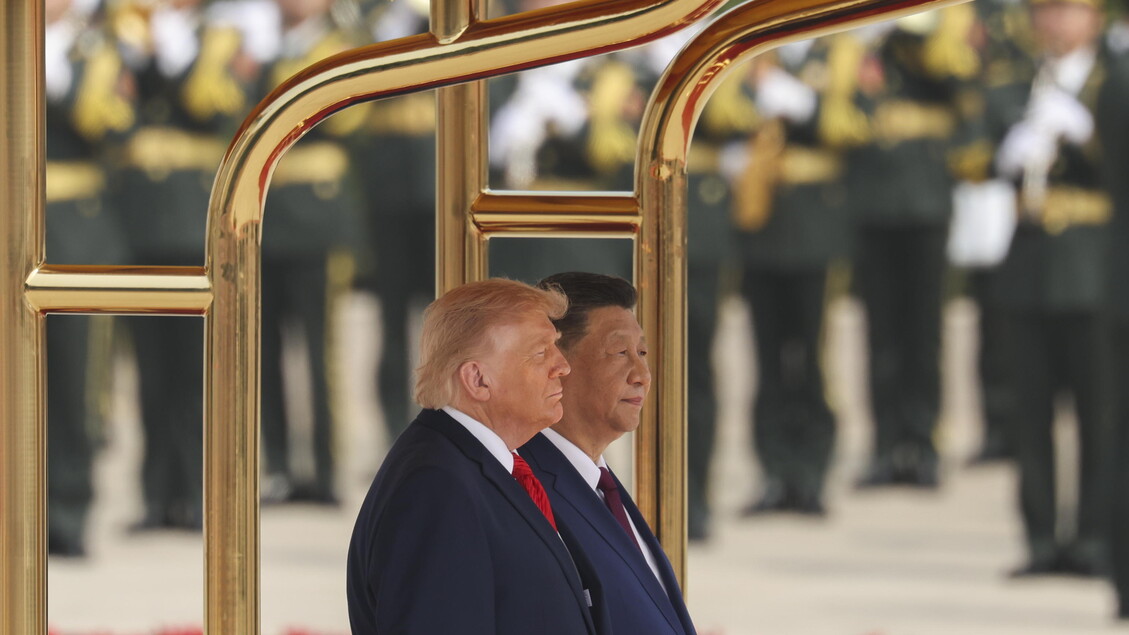
“We are a democratic, sovereign and independent nation.” Taiwan raises its head and finally responds to Donald Trump, who with his visit to Beijing has shaken the entire security architecture of the island. Alongside Xi Jinping, the tycoon has in fact shown an ambiguity which, on the one hand, has unleashed a wave of political repercussions throughout the world – including the United States and in particular Capitol Hill – on the other, it has alarmed the leaders of Taipei for the possible concrete consequences of an American misalignment.
In particular, on the topic of military support and the supply of weapons. The island’s Foreign Ministry made it clear that Taiwan “is not subordinate to the People’s Republic of China”, indirectly responding to the American president who on Fox News had expressed his aversion to “someone becoming independent”, otherwise “we would have to travel 9,500 miles to fight a war, and that’s not what I’m looking for”. Xi has in fact raised the possibility of a “conflict” between the US and China regarding the island.
But Trump denied that it was a “threat” to the United States, as underlined by many American commentators, including Republicans. The Taiwanese ministry then attempted to underline how both Trump and US Secretary of State Marco Rubio reiterated that Washington’s policy on the island remains “unchanged”: as regards the sale of arms, “this is not only a US commitment to the security of Taiwan – as clearly established in the Taiwan Relations Act – but also a form of joint deterrence against regional threats”, the ministry insisted.
The law referred to in Taipei, dated 1979, obliges Washington to provide defensive weapons to the island. In December, the US government approved the second arms sale to Taiwan since Donald Trump returned to power, worth $11.1 billion, making it the largest sale since 2001, when George W. Bush approved a supply worth $18 billion. Since 1982, a key tenet of American strategy has been to avoid “consulting” Beijing on arms sales to Taiwan, while remaining vague about the possibility of military intervention in the event of a Chinese attack. A principle that seems to have been disregarded since the tycoon’s last visit: when asked about the possibility of approving a new 14 billion dollar arms package for Taiwan, which has been blocked for months, the tycoon replied that the decision “depends on China”. And that weapons “is an excellent card to play in our negotiations”. Although Trump did not specify what he would like in exchange for not supplying weapons to Taiwan, the tycoon has pressed Beijing to help put more pressure on Iran.
While Vladimir Putin is expected on May 19-20 in Beijing, where there will certainly be talk of the war in Ukraine, another topic dear to the American president’s agenda. And it is not excluded that the tycoon’s pressure also looks at greater collaboration from Taipei on the subject of microchips, of which the island has the largest and most advanced industry in the world: “I would like to see all Taiwanese chip producers export to America”, said the US leader, describing such a move as “the best thing that can be done”. In any case, Trump has made it clear that he will “make a decision soon” regarding guns. Meanwhile, analysts all agree that what the US leader expressed is exactly what Taiwan did not want to hear. Xi Jinping’s visit to Washington, announced for this autumn, will represent a further test for the fate of the island.
