
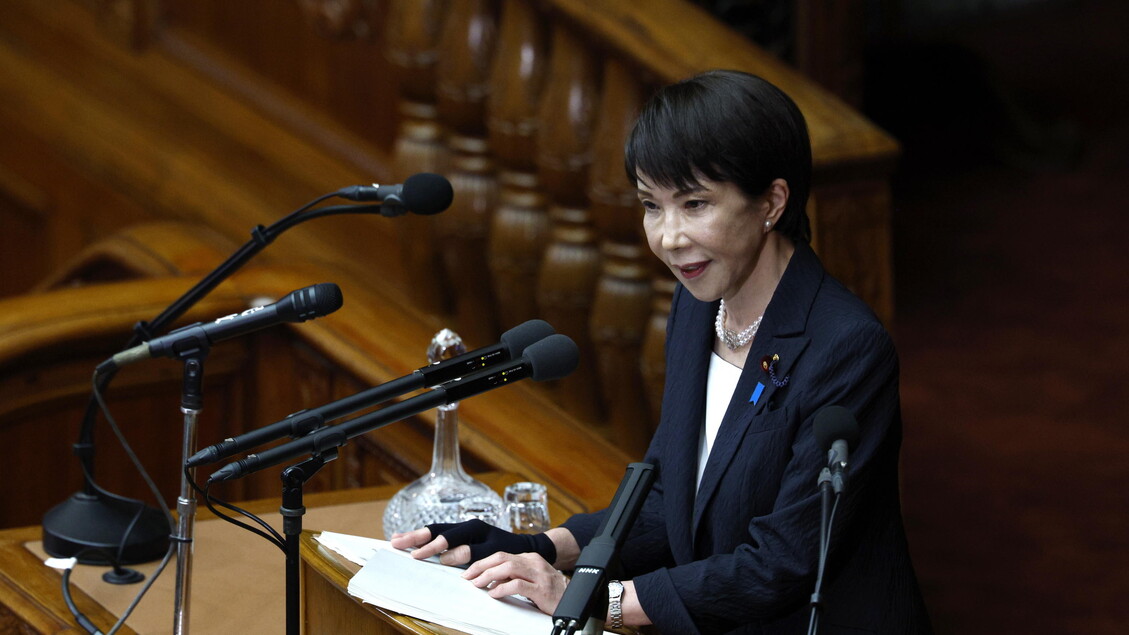
Hard line on the monarchy and defense of tradition, despite the polls
Japanese Prime Minister Sanae Takaichi reiterated in Parliament her opposition to possible changes to the succession rules of the imperial family, confirming that access to the throne must remain reserved for male descendants only. The 64-year-old leader, a leading exponent of the conservative wing of the Liberal Democratic Party, known for national-conservative positions on identity issues, however said she respects the conclusions of a panel of experts who examined the issue, judging it “appropriate to limit eligibility to male descendants belonging to the imperial lineage”, and despite the polls recording widespread public support for the hypothesis of a regnant empress. The position fits into a broader framework of defense of traditions, observers say. Takaichi, in fact, also openly opposes the introduction of the double surname for married couples, a measure supported by those who promote greater gender equality but seen by conservatives as a threat to the traditional family unit. Despite being the first woman to become Prime Minister in Japan, the opposition points out, her government composition currently has only two female ministers, a choice that reflects internal resistance within the Conservative Party on issues of female representation. The Chrysanthemum Throne in Japan is the oldest hereditary monarchy existing in the world without having undergone interruptions, starting from 660 BC. Under current provisions, succession is only allowed to male-line descendants of the imperial lineage, while princesses lose their titles following marriage to non-blue-blooded people.
