
Blocking the Lhende River
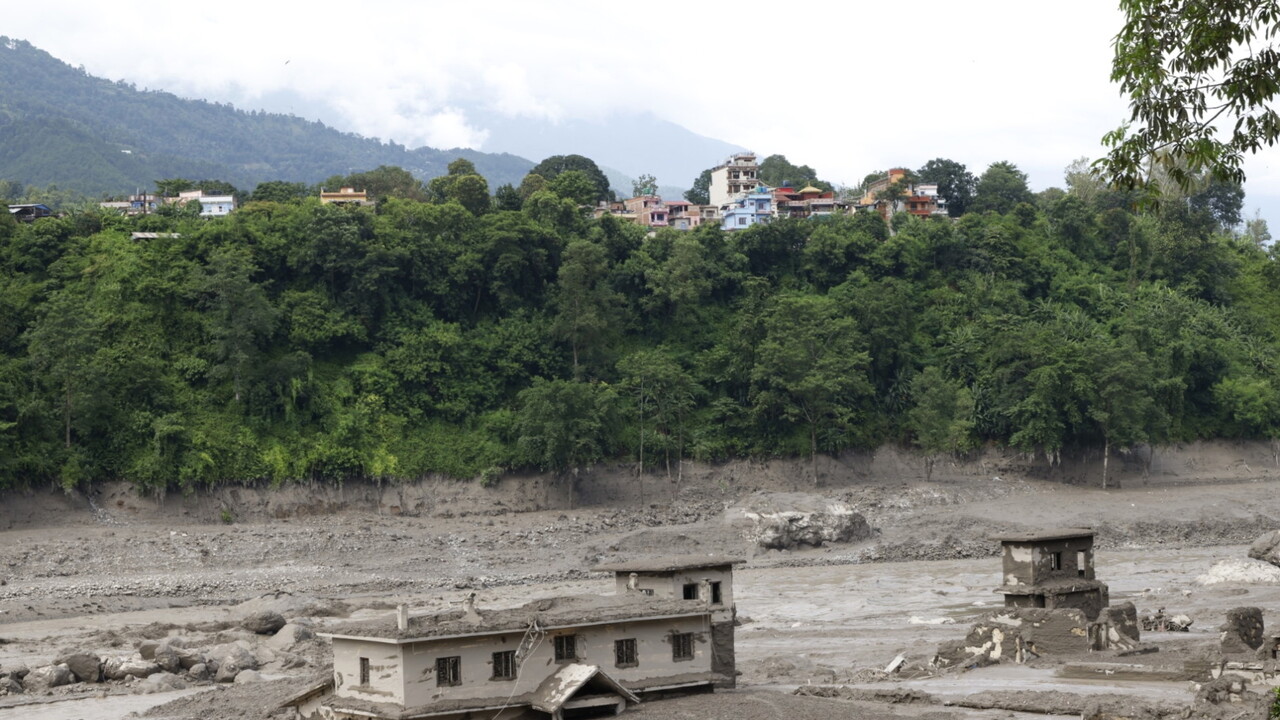
An ice avalanche may have blocked the Lhende River, causing the sudden accumulation of water and the subsequent flood wave in the Bhotekoshi River, in the Nepalese district of Rasuwa. This is the hypothesis that emerged from an initial evaluation by Nepalese and Chinese scientists, cited by the Kathmandu Post.
According to Rijan Bhakta Kayastha, a professor at Kathmandu University and climate researcher, the avalanche fell into the Lhende, creating a temporary barrier. The water would then have accumulated upstream and then suddenly flowed downstream, causing the flood that hit the Bhotekoshi.
“The initial hypothesis is that an ice avalanche and, perhaps, the rupture of a glacial lake caused the flooding,” explained Kayastha, underlining however that it will take several days to establish whether there was also the collapse of a glacial lake.
In fact, in the same area there are several large glacial lakes and a similar episode occurred in July 2025. On that occasion, according to the Department of Hydrology and Meteorology of Nepal, a rupture of a glacial lake caused a flood in the Lhende, near the border between Nepal and China.
The absence of intense rainfall in the Rasuwa area also strengthens the hypothesis of a sudden event. The Department of Hydrology and Meteorology reported that no heavy rain was recorded in the area on Tuesday and Wednesday and that significant rainfall was not expected on Wednesday either.
Kayastha therefore ruled out that heavy rains were the main cause of the flood, observing that the speed with which the water arrived is more compatible with the sudden collapse of an upstream dam.
Another element being examined by experts is a 4.4 magnitude earthquake recorded by the US Geological Survey in Tibetan territory at 8.37 am, about 47 kilometers north of Gosainkunda, in the same period as the event.
